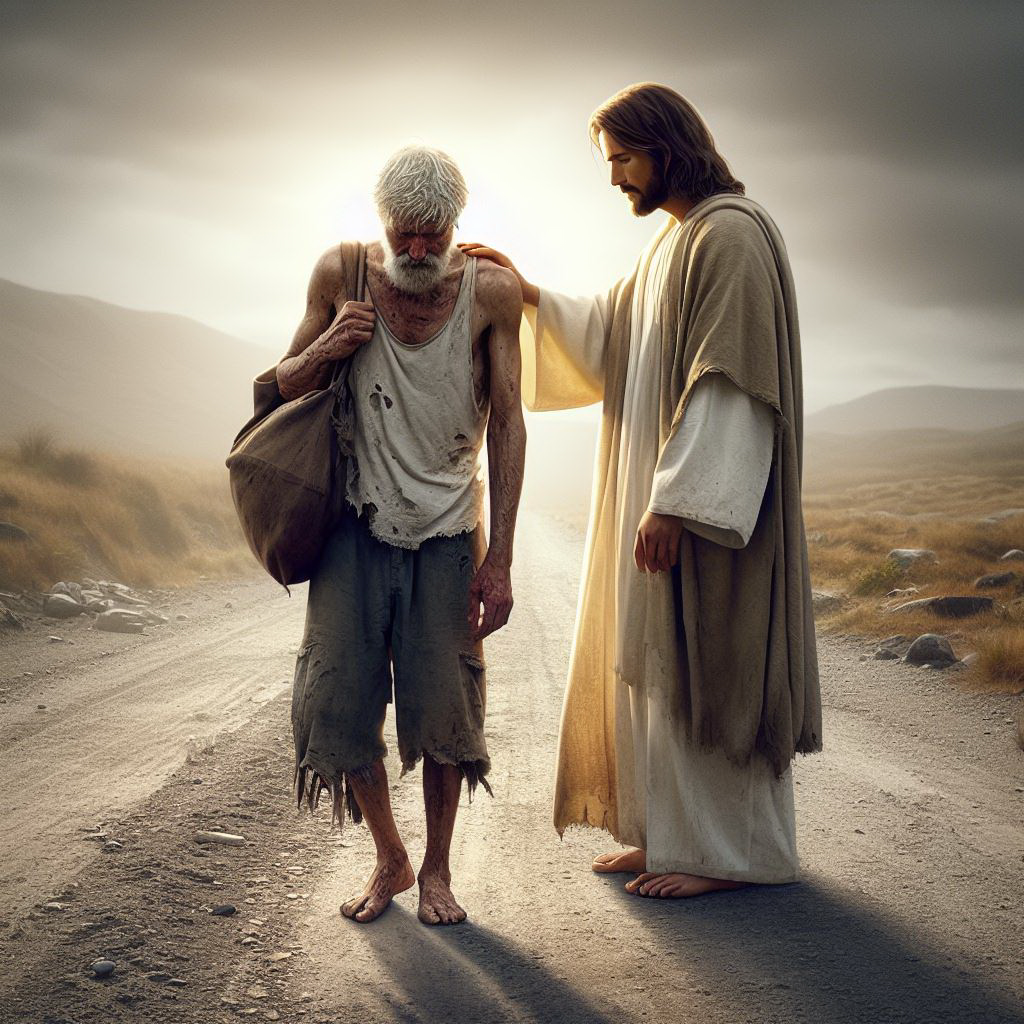
Boaz the Kinsman-Redeemer and Ruth: Faith Over Fear at the City Gate (Ruth 4)

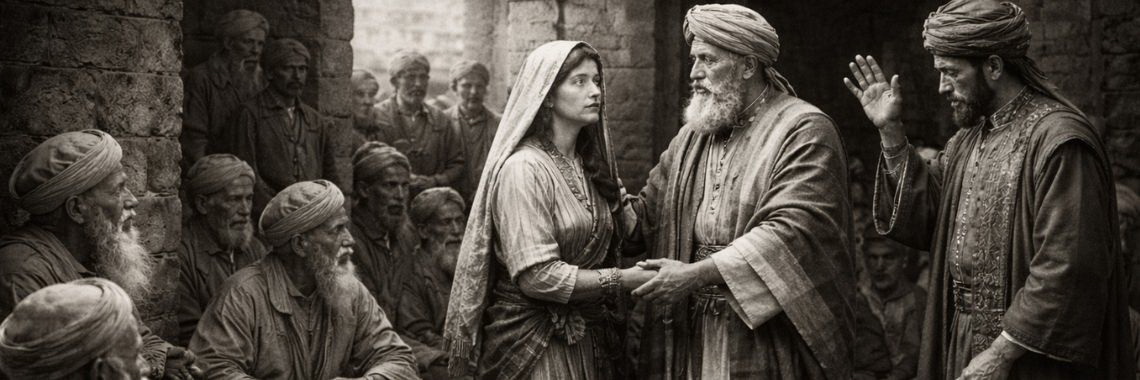
Boaz the Kinsman-Redeemer and Ruth: Faith Over Fear at the City Gate (Ruth 4)
Why is it important to accept Jesus Christ into our hearts?
The Book of Ruth does not speak about faith as decoration, but takes the reader into a real-life situation where the cost of obedience is real. The background is loss: Naomi’s husband (Elimelech) dies, then her two sons die as well, including Ruth’s husband, Mahlon. Two widows remain—Naomi and Ruth—standing in vulnerability, with no clear future. This is exactly where the LORD’s order and mercy are tested in practice.
Scripture shows that God did not give Israel commandments only, but also merciful safeguards meant to keep poverty and grief from crushing a person forever. In the Law there is both command and promise regarding openhearted generosity toward a brother in need:
“If there be among you a poor man of one of thy brethren… thou shalt not harden thine heart, nor shut thine hand from thy poor brother: But thou shalt open thine hand wide unto him…” (Deuteronomy 15:7–8, KJV)
“Thou shalt surely give him… because that for this thing the LORD thy God shall bless thee in all thy works…” (Deuteronomy 15:10, KJV)
Yet Naomi’s return also reveals something very human: a suffering heart often sees only the pain and cannot yet see that the LORD is already at work. Naomi says:
“Call me not Naomi, call me Mara: for the Almighty hath dealt very bitterly with me.” (Ruth 1:20, KJV)
“…the LORD hath testified against me, and the Almighty hath afflicted me.” (Ruth 1:21, KJV)
These are hard words, and Scripture does not hide them. But the unfolding story proves that even where Naomi sees only bitterness and helplessness, the LORD is already preparing deliverance. God’s unseen work often begins long before a person recognizes it.
In Ruth, a key Old Testament concept appears: the “kinsman-redeemer.” The Hebrew term is גֹּאֵל (go’el), Strong’s H1352, and the verb is גָּאַל (ga’al), Strong’s H1350—to redeem, to reclaim, to rescue. The idea is not merely legal technique. It reflects something of God’s own character: the LORD is not indifferent when His people fall into distress. He is a Redeemer who restores what is endangered and provides a way forward.
Ruth 4 shows this principle in a very concrete setting: there is a closer kinsman than Boaz, a man who has the first right of redemption. The matter is handled properly at the gate. The turning point comes when it becomes clear that the redemption is not just a land transaction. It is bound up with taking Ruth as well, so that the name of the dead may not be cut off from his inheritance. Boaz states the purpose plainly:
“…to raise up the name of the dead upon his inheritance, that the name of the dead be not cut off from among his brethren…” (Ruth 4:10, KJV)
At that moment the closer kinsman steps back, fearing damage to his own inheritance. Scripture records the fact without detailing every inner motive. It does not spell out all the calculations or pressures behind his decision, but it does show that when mercy became costly, he refused to carry the weight. And it is striking that his name is not recorded. Scripture itself thereby warns: a man may choose what looks “safe” in the moment, and yet miss the blessing tied to God’s order.
Boaz, however, accepts the responsibility. Throughout the narrative Scripture reveals that Boaz does not judge by outward marks but honors faith and character. Ruth is described as diligent, steadfast, and devoted to Naomi. Boaz notices this and responds with protection and kindness. He speaks to her with purity, provides for her, and ensures she is not harmed.
A crucial detail remains: Ruth is a Moabitess. Moabites were not viewed favorably in Israel, and the Law contains strong warnings regarding Moab. Many would have asked, “What will people say? What will this cost my reputation?” But Ruth shows that Boaz’s decision is not governed by public opinion or by ethnic stigma; it is governed by the reality of Ruth’s turning to the God of Israel. Boaz does not despise her; he honors her faith.
Ruth’s Moabite background becomes an even greater message when the story continues: she is brought into the bloodline leading to the Messiah. This is not coincidence, but a sign of God’s sovereignty and mercy. Where men draw hard lines too quickly, God is able to work repentance, faith, and restoration. Where man sees “an outsider,” the LORD often sees a heart He is drawing.
This becomes a warning to the church today. It is easy to judge by background, history, social standing, or reputation. But Jesus gives a clear restraint:
“Judge not, that ye be not judged.” (Matthew 7:1, KJV)
This does not mean evil should be excused or that sin should be celebrated. Evil must be rejected, and sin must be forsaken. But the final verdict on a person’s heart belongs to the LORD. Scripture repeatedly teaches that careless judgment is dangerous because we do not see all that God is doing. Where someone sees only “a Moabitess,” the LORD may already be working the miracle of repentance and new life.
Ruth’s decisive moment becomes a New Testament question: whom will life obey when a crossroads comes? When the crowd, public pressure, political atmosphere, family influence, or “everyone is doing it” pulls one way, and God calls by His Word to the narrow path. Jesus’ warning remains true:
“…narrow is the way, which leadeth unto life…” (Matthew 7:14, KJV)
Ruth teaches that faith is not merely a thought but obedience at the moment of decision. The closer kinsman stepped back when mercy became expensive. Boaz bore the cost, and the LORD turned that step into blessing. This is not a mechanical formula, as if God automatically converts obedience into money. The LORD looks at the heart, and He delights in mercy that flows from faith, not from bargaining. Yet His promise stands:
“…for this thing the LORD thy God shall bless thee…” (Deuteronomy 15:10, KJV)
So Ruth both comforts and confronts: it comforts, because behind Naomi’s “Mara” bitterness the LORD was already working; and it confronts, because fear can push a person back from mercy—while God’s way is the narrow path that leads to life.
As a closing strengthening, these two Scriptures belong together: the promise attached to an open hand, and the warning about the narrow way.
“…for this thing the LORD thy God shall bless thee…” (Deuteronomy 15:10, KJV)
“…narrow is the way, which leadeth unto life…” (Matthew 7:14, KJV)
Let me share 3 Scriptures that help us better understand the importance of receiving Jesus and its inevitability.
Romans 10:8 – 10
8 But what saith it? The word is nigh thee, even in thy mouth, and in thy heart: that is, the word of faith, which we preach;
9 That if thou shalt confess with thy mouth the Lord Jesus, and shalt believe in thine heart that God hath raised him from the dead, thou shalt be saved.
10 For with the heart man believeth unto righteousness; and with the mouth confession is made unto salvation.
If you’re reading this today and you want to be with our Heavenly Father and Jesus Christ in eternity, know that this verse shows you how to do it. John 14:6 Jesus saith unto him, I am the way, the truth, and the life: no man cometh unto the Father, but by me. In the following sections, I will guide you through how to confess all of this before our Father and our Lord Jesus.
Read this prayer out loud with faith in your heart, for what is written there is faithful and true.
John 3:7 Marvel not that I said unto thee, Ye must be born again.
John 3:3 Jesus answered and said unto him, Verily, verily, I say unto thee, Except a man be born again, he cannot see the kingdom of God. These are the words of Jesus.
You can be born again as the Bible teaches: you need to confess
your faith. After you have been born again, say this short but very important prayer
with your loved ones, relatives, friends, and all those who believe in Jesus Christ. Because to be born again, we must confess our faith. This is what the next section is about.
Prayer for Salvation.
I believe that Jesus is the Son of God.
I believe that Jesus died for my sins,
according to the teachings of the Bible.
I believe that Jesus rose from the dead,
for my justification.
Please, Jesus, be my Lord!
Please, Jesus, be my Savior!
Please, Jesus, be my Healer!
Jesus, You are my Lord.
Jesus, You are my Savior.
Jesus, You are my Healer.
I am redeemed. I am born again in Christ.
His holy blood has cleansed me from all sins.
This is the truth, for the Word of God is truth.
Thank you, dear Jesus. Amen.
For everyone who calls on the name of the Lord will be saved.
Matthew 10:32 Whosoever therefore shall confess me before men, him will I confess also before my Father which is in heaven.
Discover additional scriptural insights connected to this message
More Than
2 Timothy 4:2 Preach the word; be instant in season, out of season; reprove, rebuke, exhort with all longsuffering and doctrine.
Reality
My service is not tied to a place, not located under a country or street name, and not hidden behind a phone number. I serve my Heavenly Father in the name of Jesus Christ, growing in Him day by day, being transformed from my old self to become like Christ.