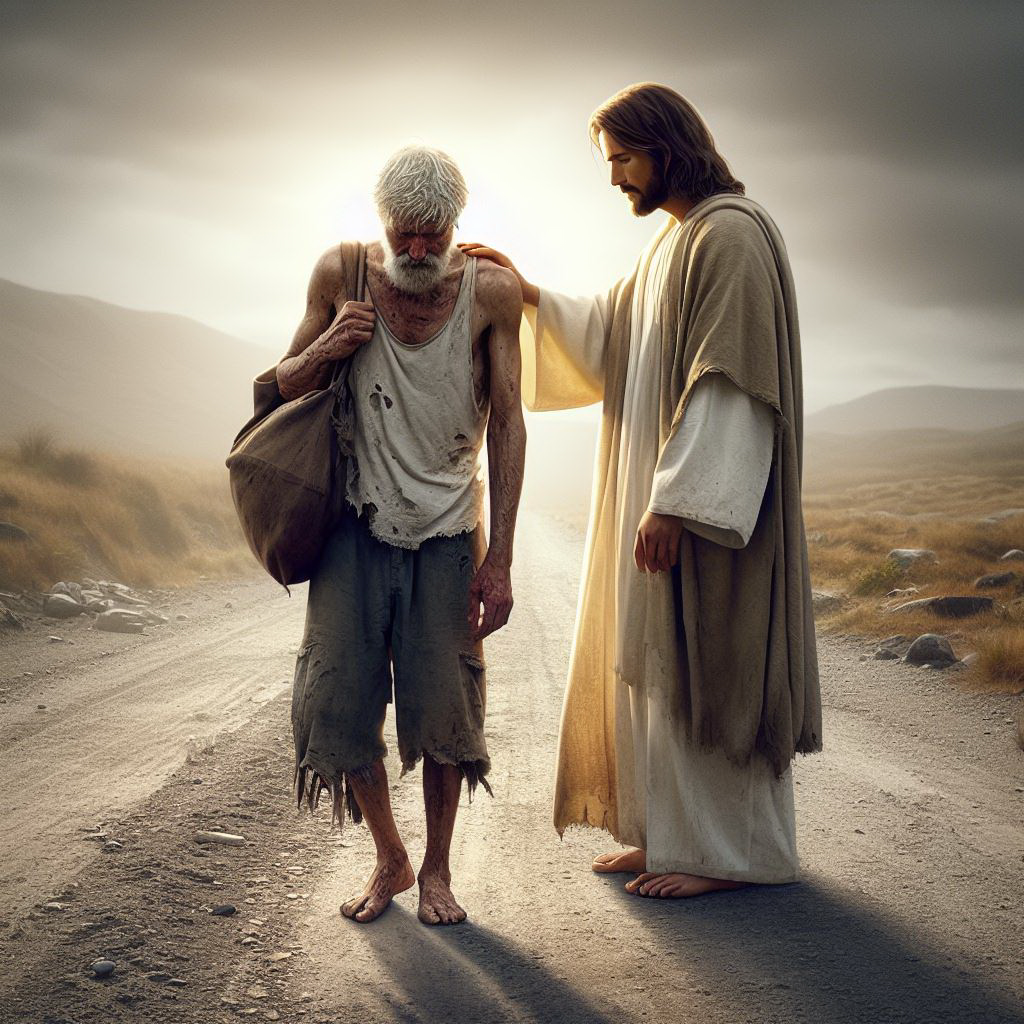
The Risen Christ Still Speaks Today.
Why is it important to accept Jesus Christ into our hearts?
What He accomplished, what He promised, and how we should live now
Main passage / key text: John 20:19–31, especially John 20:21–22 and John 20:31
Context of the passage
The message of Resurrection Sunday is not exhausted by saying that the tomb was empty. The resurrection is not merely a remarkable event in the past; it is God’s decisive declaration that Jesus Christ truly is who He said He is, and that His redeeming work stands. In John 20, the emphasis is not only that the disciples saw the risen Lord, but that the risen Christ brought peace, gave a commission, breathed out the promise of the Holy Spirit, called men to faith, and offered life in His name.
John himself tells us why this account was written. John 20:31 says, “But these are written, that you might believe that Jesus is the Christ, the Son of God; and that believing you might have life through his name.”
So this passage is not only about the comfort of the first disciples. It is about the voice of the risen Christ still speaking today. He speaks about what He has accomplished, about what He has left to His people, and about how we must now answer Him in this present season of grace.
The resurrection declares that Christ’s work did not end in the grave
Many think of the cross as though it were the end of the story. But in Scripture, the cross and the resurrection belong together. Even in the Old Testament, Isaiah speaks of the suffering Servant in a way that does not stop at death.
Isaiah 53:10–11
“Yet it pleased the LORD to bruise him; he has put him to grief: when you shall make his soul an offering for sin, he shall see his offspring, he shall prolong his days, and the will of the LORD shall prosper in his hand. He shall see the travail of his soul, and shall be satisfied: by his knowledge shall my righteous servant justify many; for he shall bear their iniquities.”
This matters because it shows that the suffering of the Messiah was truly a sin-offering, yet the story does not end in the silence of the tomb. The One who pours out His soul unto death will “see his offspring” and “prolong his days.” The will of the LORD will prosper in His hand. That points beyond the cross to resurrection life.
So on Resurrection Sunday we do not simply celebrate that a dead man lived again. We confess that the crucified Christ rose again, and by this God openly declared that His sacrifice was accepted. The payment for sin was made, yet death could not hold Him.
The resurrection therefore proclaims that Jesus did not fail, did not fall short, and did not leave redemption unfinished. He accomplished it, and He rose in victory.
What has Christ redeemed us from?
When we say that Jesus redeemed us, we must not use the word lightly. Scripture speaks plainly about what the Son of God saves sinners from.
John 3:16–18
“For God so loved the world, that he gave his only begotten Son, that whosoever believes in him should not perish, but have everlasting life. For God sent not his Son into the world to condemn the world; but that the world through him might be saved. He that believes on him is not condemned: but he that believes not is condemned already, because he has not believed in the name of the only begotten Son of God.”
This passage shows first that Christ redeems from condemnation. Man’s deepest problem is not merely pain, confusion, or brokenness. It is guilt before God. Sin is not just a collection of bad habits. It is rebellion against the living God. Therefore redemption is not simply moral improvement or religious help. It is rescue from a perishing condition.
Christ came, as the text says, that the world through Him “might be saved.” He did not come first of all to offer advice, but salvation. He did not come merely as an example, but as Savior. And the resurrection shows that this salvation is real and effectual.
But John goes further. He speaks not only about condemnation, but also about darkness. Men loved darkness rather than light. Christ therefore saves not only from future judgment, but from present blindness, unbelief, and darkness of heart. He brings sinners into the light.
And the resurrection also speaks to the question of death. In John 14:19 Jesus says, “because I live, you shall live also.” This strengthens the truth that the risen Christ not only justifies; He gives life. His resurrection is the ground of our hope. In Him there is forgiveness, new life now, and the sure promise of resurrection to come.
So we may say it plainly: Jesus Christ redeems from the guilt of sin, from condemnation, from the dominion of darkness, and from the final terror of death.
The risen Lord did not only appear; He spoke
After His resurrection, Jesus did not stand before the disciples in silent triumph. He spoke. And what He said is decisive.
John 20:19–21
“Then the same day at evening, being the first day of the week, when the doors were shut where the disciples were assembled for fear of the Jews, came Jesus and stood in the midst, and said unto them, Peace be unto you. And when he had so said, he showed unto them his hands and his side. Then were the disciples glad, when they saw the Lord. Then said Jesus to them again, Peace be unto you: as my Father has sent me, even so send I you.”
The disciples are behind shut doors, paralyzed by fear. That detail matters. The risen Christ did not come because His people were already strong, steady, and ready. He came to fearful men. And into that fear He spoke His first word: “Peace be unto you.”
This is more than a greeting. It is the fruit of His redeeming work. The One who says these words is the very One who shows them His hands and His side. This peace is not cheap comfort. It is purchased peace. The wounds remain visible, and on the ground of His finished work He can say, “Peace be unto you.”
Then He gives them a commission. This too matters deeply. Jesus does not comfort His people so that they may remain hidden away in religious safety. He comforts them and then sends them. “As my Father has sent me, even so send I you.” Resurrection is therefore not only a message of joy; it is also a sending.
Where the risen Christ is truly known, life cannot remain the same.
What did He leave to His followers when He went to the Father?
The words spoken around the ascension show clearly what Christ intended for His people in this earthly season.
Acts 1:3–5 says that after His suffering He “showed himself alive after his passion by many infallible proofs,” speaking of “the things pertaining to the kingdom of God,” and commanding them to wait for “the promise of the Father.”
He did not leave His disciples in uncertainty. He taught them, prepared them, and pointed them to the Father’s promise.
The same is seen in John 20:22: “And when he had said this, he breathed on them, and said unto them, Receive you the Holy Spirit.” This strengthens the truth that the risen Christ does not only assign a task; He also points to the divine power needed for it. Christian life is not sustained by human resolve alone. It is life under the working of the Holy Spirit.
And Jesus had already promised this. In John 14:18–20 He says, “I will not leave you comfortless: I will come to you. Yet a little while, and the world sees me no more; but you see me: because I live, you shall live also. At that day you shall know that I am in my Father, and you in me, and I in you.”
Here the order of the triune work shines clearly. The Father sends the Son. The Son redeems and rises. The Son does not leave His own as orphans, but by the Holy Spirit remains with them. Christian faith is therefore not the memory of absent disciples clinging to a distant Teacher. It is communion with the living Christ through the Spirit, unto the glory of the Father.
How should we live now on the earth?
After the ascension, the disciples were living in a condition much like ours. They no longer walked with Jesus in the flesh, yet they lived under the rule of the exalted Christ, in dependence on the Holy Spirit, and under the commission of the gospel. That is also our place.
Acts 1:8 says, “But you shall receive power, after the Holy Spirit has come upon you: and you shall be witnesses unto me both in Jerusalem, and in all Judea, and in Samaria, and unto the uttermost part of the earth.”
This shows that the present time of the church is the time of witness. It is not the time of passive waiting, not the time of preserving religious form without life, and not the time of turning inward. The risen and ascended Christ calls for witnesses. Not men who advertise themselves, but men and women who bear witness to Him.
Luke 24:46–49 says the same in summary form: “Thus it is written, and thus it was fit for Christ to suffer, and to rise from the dead the third day: And that repentance and remission of sins should be preached in his name among all nations, beginning at Jerusalem. And you are witnesses of these things. And, behold, I send the promise of my Father upon you: but tarry you in the city of Jerusalem, until you are endued with power from on high.”
The order is plain. Christ suffered. Christ rose. Repentance and remission of sins must be preached in His name. His people are witnesses. And for this they need power from on high.
So the post-resurrection Christian life is not self-invented. We do not decide for ourselves how to serve God. Christ Himself has shown the pattern: we are to live in His peace, walk in obedience to His word, depend upon the Holy Spirit, and bear witness to His name.
This present season of grace is not a neutral time
It is especially important that teaching on the resurrection does not remain a seasonal meditation. In Scripture, the gospel always calls for a response. The risen Christ still speaks, but man cannot remain indefinitely in delay and indecision.
In John 20, Thomas is not recorded merely to shame doubters, but to bring the reader to confession. John 20:28 says, “And Thomas answered and said unto him, My Lord and my God.” Then Jesus says, “blessed are they that have not seen, and yet have believed.”
Then John explains why the account was written at all: that we may believe that Jesus is the Christ, the Son of God, and that believing we may have life through His name. So the testimony of the resurrection is not mere information. It is a call to faith.
This means the present time is a season of grace. Repentance and remission of sins are still preached in His name. The door of mercy is still open. The gospel still goes forth. But that openness is not to be treated lightly. John 3 says that the one who believes is not condemned, but the one who believes not is condemned already
The urgency, then, is not human pressure. It is the seriousness of the gospel itself. It is urgent to come to Christ because He truly is the Son of God, truly died for sins, truly rose again, truly sat down at the Father’s right hand, and truly will come again.
Acts 1:11 says, “this same Jesus, who is taken up from you into heaven, shall so come in like manner as you have seen him go into heaven.”
So the season of grace is also a season of waiting, but not of aimless waiting. The church lives in the time of the living, reigning, and returning Christ.
Brief summary / closing thought
The message of Resurrection Sunday does not stop with the empty tomb. The resurrection declares that the work of the cross stands, that the ransom for sin has been accomplished, that the power of death has been broken, and that the Son of God lives. The risen Christ gives peace, calls men to faith, promises the Holy Spirit, entrusts His people with witness, and summons sinners to repentance. The great question, then, is not whether we have some religious interest in Jesus, but whether we have come to say with Thomas, “My Lord and my God.”
Direct address
Dear reader, the risen Christ is not a silent memory. He is the living Lord. He does not only want to persuade you that He rose; He also confronts you with your need of Him. If until now you have known Jesus only from a distance, do not stop at Easter emotion. Come to Him in faith. Acknowledge that apart from Him you are lost, and that only He can save you from sin, condemnation, darkness, and the fear of death.
And if you already belong to Him, do not live as one who merely looks back to Easter. Live as one who belongs to the risen and exalted Christ. Walk in His peace, obey His word, depend upon His Spirit, and be His witness where He has placed you.
Self-examination questions
Have I truly come to the place where I no longer speak of Jesus only as a doctrine, but confess Him personally as “My Lord and my God”?
Does my life show the peace of the risen Christ, or am I still ruled mainly by fear, delay, and spiritual hiding?
Do I view this present time as the season of grace and the season of Christ-given witness, or do I still live as though I had unlimited time to answer Him?
Let me share 3 Scriptures that help us better understand the importance of receiving Jesus and its inevitability.
Romans 10:8 – 10
8 But what saith it? The word is nigh thee, even in thy mouth, and in thy heart: that is, the word of faith, which we preach;
9 That if thou shalt confess with thy mouth the Lord Jesus, and shalt believe in thine heart that God hath raised him from the dead, thou shalt be saved.
10 For with the heart man believeth unto righteousness; and with the mouth confession is made unto salvation.
If you’re reading this today and you want to be with our Heavenly Father and Jesus Christ in eternity, know that this verse shows you how to do it. John 14:6 Jesus saith unto him, I am the way, the truth, and the life: no man cometh unto the Father, but by me. In the following sections, I will guide you through how to confess all of this before our Father and our Lord Jesus.
Read this prayer out loud with faith in your heart, for what is written there is faithful and true.
John 3:7 Marvel not that I said unto thee, Ye must be born again.
John 3:3 Jesus answered and said unto him, Verily, verily, I say unto thee, Except a man be born again, he cannot see the kingdom of God. These are the words of Jesus.
You can be born again as the Bible teaches: you need to confess
your faith. After you have been born again, say this short but very important prayer
with your loved ones, relatives, friends, and all those who believe in Jesus Christ. Because to be born again, we must confess our faith. This is what the next section is about.
Prayer for Salvation.
I believe that Jesus is the Son of God.
I believe that Jesus died for my sins,
according to the teachings of the Bible.
I believe that Jesus rose from the dead,
for my justification.
Please, Jesus, be my Lord!
Please, Jesus, be my Savior!
Please, Jesus, be my Healer!
Jesus, You are my Lord.
Jesus, You are my Savior.
Jesus, You are my Healer.
I am redeemed. I am born again in Christ.
His holy blood has cleansed me from all sins.
This is the truth, for the Word of God is truth.
Thank you, dear Jesus. Amen.
For everyone who calls on the name of the Lord will be saved.
Matthew 10:32 Whosoever therefore shall confess me before men, him will I confess also before my Father which is in heaven.
More Than
2 Timothy 4:2 Preach the word; be instant in season, out of season; reprove, rebuke, exhort with all longsuffering and doctrine.
Reality
My service is not tied to a place, not located under a country or street name, and not hidden behind a phone number. I serve my Heavenly Father in the name of Jesus Christ, growing in Him day by day, being transformed from my old self to become like Christ.